


Consumers now spend more time online, using search engines, social media, websites, and mobile apps to research and make purchasing decisions.
As a result, businesses have had to adapt how they reach and engage customers. This shift in behaviour is what led to the rise of digital marketing as a core business practice.
In this beginner’s guide, you will learn what digital marketing is and why it has become essential for modern businesses today.
What is digital marketing?
Digital marketing refers to the use of websites, search engines, social media, email, and online advertising to promote products or services and connect with potential customers.
Instead of relying on traditional advertising alone, businesses now reach audiences through online platforms where attention, intent, and data can be measured in real-time. With digital marketing, businesses can easily reach specific audiences, track and adjust their campaign performances using the data-driven attribution model, and deliver more relevant messages based on user behaviour, interests, and their search intent.
In simple terms, digital marketing is how businesses use the internet and digital tools to find, reach, and communicate with customers online.
What are the fundamental of digital marketing?
Long story short, the fundamentals of marketing remains the same. The core ideas like understanding your audience, delivering the right message, and guiding people to take action still applies.
The only difference is that digital marketing simply uses online channels to do this more efficiently and at scale. As long as you understand the basics of marketing, applying them in a digital context becomes much easier.
1. Understanding audience and intent
Digital marketing starts with understanding who your audience is and what they are trying to achieve online. Different users have different intentions, such as researching, comparing, or making a purchase. Effective digital marketing aligns messages and experiences with these intentions.
For example, EduAdvisor wrote a blog on 10 tips for choosing a university, targeting prospects who are looking to apply to a university. On the same blog page, they also strategically placed banners and pop-ups for students to join their education fair.

This allows EduAdvisor to educate students who are not yet ready to commit, while offering a clear next step for those who are prepared to speak to advisors or explore enrolment opportunities. This approach aligns content and calls to action with different audience intents on the same page.
2. Digital channels for distribution
Search engines, social media platforms, email, and advertising tools are channels for distribution, not strategies on their own. The strategy comes from deciding who to reach, what message to deliver, and when to deliver it. Digital channels simply help execute that strategy at scale.
For example, Semrush shares a post that clarifies important topics for marketers, such as how AI visibility tools actually function. The goal is not to post for the sake of the algorithm, but to share useful insights that match audience interests, with LinkedIn acting as the distribution channel.
3. Relevant content creation
Audiences move through different stages before taking action. Digital marketing fundamentals require creating content that matches each stage, from awareness and consideration to decision-making. The goal is relevance over volume.
Brevo creates different types of educational content for users at different stages of their decision journey. Educational articles introduce email marketing concepts for beginners, while comparison pages such as “Mailchimp alternatives” or “Brevo vs HubSpot”
In addition, Brevo produces explainer videos that give a high-level overview of its CRM suite, showing how marketing, sales, conversations, and automation tools work together. This type of content helps prospects who already understand the problem but need clarity on how a solution fits into their workflow.
Each type of content serves a different stage of the journey, ensuring users receive relevant information based on their readiness rather than a single, repeated message.
4. Data-driven decisions
User interactions can be tracked, analysed, and used to improve decisions. Data helps marketers understand what is working and where adjustments are needed.
Marketers can see which blog pages attract the most visitors, which emails get opened, or which ads generate enquiries in platforms like Google Analytics, Meta Ads Manager, and their preferred email marketing platform. This data helps decide what to improve, stop, or invest more in.
Data-driven marketing is especially useful for paid advertising, where every action can be measured and compared. Paid ads allow marketers to see exactly how much traffic, engagement, and conversions each campaign generates, making it easier to understand what is delivering results. Over time, paid advertising becomes more efficient, where every adjustment and decision is guided by real data.
5. Converting attention into action
A core fundamental is ensuring that attention leads to meaningful actions. Instead of measuring success only by clicks or page views, digital marketing focuses on outcomes such as form submissions, resource downloads, or email sign-ups.
6. Guiding clients/customers throughout the journey
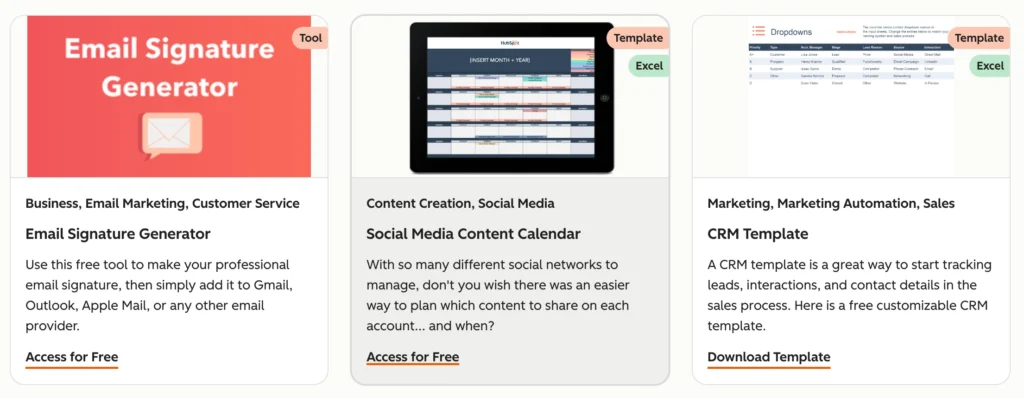
Big brand like HubSpot offers a wide range of free resources such as courses, certifications, ebooks, guides, and website templates. These actions indicate genuine interest and make digital efforts measurable, and provide immediate value to users who are learning or solving problems.
At the same time, they also include clear options for users to start a free trial or request a demo when they are ready. This approach turns educational engagement into measurable actions without forcing a sales conversation too early.
7. Long-term relationships
Sustainable digital marketing prioritises relationships over short-term exposure. Trust, consistency, and ongoing engagement are crucial for achieving long-term success, particularly in competitive online environments.
For example, a visitor who subscribes to useful updates or regularly reads helpful content may not become a customer immediately, but over time, they are more likely to trust the brand when they are ready to decide.
How Digital Marketing Grows Your Business?
While the fundamentals explain how digital marketing should be approached, digital marketing itself plays a clear functional role in helping businesses grow and operate more effectively.
1. Attracts the Right Audience Online
Digital marketing helps businesses reach people who are actively searching for information, products, or services. Instead of relying on broad exposure, businesses can focus on audiences that are more likely to be interested.
For example, a local service business can appear in search results when nearby users look for solutions it offers, rather than showing ads to people who are not interested or not in the same locations.
2. Captures Demand and Interest
Through websites, landing pages, and online forms, digital marketing captures user interest at the moment it occurs. This allows businesses to respond to enquiries, requests, or interactions on time.
For example, when someone fills in a contact form or requests more information on a website, digital marketing helps record that interest so the business can respond instead of losing the opportunity.
3. Nurtures Prospects Over Time
Not all users are ready to take action immediately. Digital marketing enables businesses to stay connected with prospects through content, email, and follow-up communication, keeping the brand relevant throughout the decision process.
For example, a potential customer might receive helpful emails or see follow-up content that answers common questions, keeping the business top of mind while the person continues to evaluate options.
4. Converts Leads Into Customers
Digital marketing supports the transition from interest to action. By providing clear information, trust signals, and calls to action, businesses can guide potential customers toward making a decision.
For example, clear product information, testimonials, and easy-to-use contact options can help someone move from “interested” to “ready to buy” without needing repeated manual follow-ups.
5. Retains and Re-Engages Existing Customers
Digital marketing is not limited to acquisition. It also helps businesses maintain relationships with existing customers through updates, reminders, and personalised communication, encouraging repeat engagement.
For example, a digital marketing strategy may involve providing updates, product recommendations, and reminders to existing customers that encourage repeat purchases or continued engagement with the brand.
6. Provides Measurable Performance and ROI
Unlike traditional marketing, digital marketing allows performance to be measured in detail. Businesses can track results, understand return on investment, and optimise efforts based on real data.
For example, a business can compare how many enquiries came from a website campaign versus a social media campaign and decide where to focus future efforts based on actual results.
What Are the Types of Digital Marketing?
Digital marketing includes a range of channels and approaches that businesses use to reach and engage audiences online. Each type of digital marketing serves a different purpose and is often used together as part of a broader strategy.
Below are the main types of digital marketing and how they are commonly used.
1. Search engine marketing (SEO & paid search)
Search engine marketing focuses on helping businesses appear on search engines when users look for information, products, or services. This includes search engine optimisation (SEO) for organic results and paid search ads for immediate visibility.
Search engine marketing is commonly used when businesses want to capture high-intent users who are actively searching for answers or solutions.
SEO supports long-term visibility and trust, while paid search helps capture demand quickly. Together, they help businesses reach users at the moment of intent.
2. Content marketing
Content marketing involves creating and sharing useful content such as articles, guides, videos, or resources that help audiences understand problems, learn new information, or make better decisions.
It is often used during the early and middle stages of the customer journey, when users are researching and exploring options.
Content builds awareness, credibility, and trust. It supports other digital marketing channels by educating audiences and preparing them for future actions.
3. Social media marketing
Social media marketing uses platforms such as LinkedIn, Instagram, Facebook, or X to maintain visibility, engage communities, and distribute content to targeted audiences, while building brand presence online.
Social media acts as a distribution and engagement channel. It helps amplify content, support brand awareness, and guide users toward deeper interactions.
4. Email marketing
Email marketing is typically used after a user has shown interest, such as subscribing to updates or submitting an enquiry. This can be used to share product updates, information, and personalised message to push for conversion rates.
Email marketing supports nurturing and retention by keeping businesses connected with prospects and customers over time in a more direct and controlled channel.
5. Paid Digital Advertising
Paid digital advertising includes online ads displayed across search engines, social media platforms, websites, and other digital networks, where it is used when businesses want immediate reach, campaign-specific exposure, or to promote time-sensitive offers.
This helps scale reach quickly and complements organic efforts by driving traffic, visibility, and conversions where needed.
6. Affiliate and Partnership Marketing
Affiliate and partnership marketing involves working with third parties, such as publishers, creators, or partners, to promote products or services.
This approach is commonly used when businesses want to expand reach through trusted external audiences.
Affiliate and partnership marketing extends distribution beyond owned channels and leverages credibility from partners to support growth.
Why digital marketing is more important now than 20 years ago?
Digital marketing became important because the way people discover and interact with brands has fundamentally changed. Consumer behaviour today is very different from how it was two decades ago.
1. Brand discovery has changed
Twenty years ago, most people learned about products and services through traditional channels such as television, newspapers, radio, billboards, or word of mouth. Marketing was largely one-way, with businesses broadcasting messages to a broad audience and hoping to reach the right people.Digital marketing became important because the way people discover and interact with brands has fundamentally changed. Consumer behaviour today is very different from how it was two decades ago.
2. Decision starts with search
Today, consumers actively search online for information before making decisions. They compare options, read reviews, watch videos, and explore websites across multiple devices. Instead of waiting for brands to reach them, consumers now control how and when they engage.
3. Intent-based marketing
Traditional marketing focused on reaching as many people as possible. Digital marketing focuses on reaching people based on intent. Businesses can now connect with users who are actively looking for specific information or solutions, making marketing more relevant and efficient.
4. Real-time data access
In the past, marketing success was difficult to measure and often relied on estimates. Digital marketing allows performance to be tracked in real time, from clicks and views to enquiries and conversions. This reduces guesswork and helps businesses make informed decisions.
5. Personalisation and speed at scale
Digital marketing makes it possible to deliver personalised messages quickly and at scale. Businesses can adjust campaigns, tailor content, and respond to audience behaviour almost instantly, something that was not possible with traditional channels.
Is digital marketing right for every business?
While digital marketing is widely used across industries, it is not a one-size-fits-all solution. Whether it is the right approach depends on the business model, target audience, and goals.
When digital marketing makes sense?
Digital marketing is especially effective for businesses whose customers search for information online, compare options, or engage through digital channels. This includes service-based businesses, education providers, e-commerce brands, and B2B companies that rely on enquiries, bookings, or lead generation.
In these cases, digital marketing helps businesses reach the right audience at the right time.
When it may not be the primary channel?
For some businesses, digital marketing may not be the main growth driver. Businesses that rely heavily on walk-in traffic, local relationships, or niche offline networks may see stronger results from traditional methods. In these situations, digital marketing can still play a supporting role rather than being the primary channel.
Why most modern business still benefit from it?
Even when digital marketing is not the main channel, most modern businesses benefit from having an online presence. Customers often search online to verify credibility, read reviews, or learn more before making decisions. Digital marketing helps ensure businesses remain visible, accessible, and relevant in today’s digital-first environment.
Conclusion
In summary, digital marketing matters because consumers discover, compare, and decide online. Businesses that understand this shift are better positioned to stay visible, build trust, and grow in a competitive digital landscape.
For those getting started, the first step is not choosing tools or platforms, but understanding your audience, goals, and how digital channels can support them. With the right foundation, digital marketing becomes a powerful way to connect with customers and drive sustainable growth.
